The Web Log for news, information & policy updates on the Bolivia transition team from Digital Warrior Media in conjunction with WBAI-FM & Pacifica Radio.
Monday, June 02, 2008
Last elements of ENRON in Bolivia fall to nationalization
The Bolivian government has continued its nationalization of key resource industries - taking full control of a key gas pipeline company, Transredes.
La Paz moved to nationalize Transredes because Ashmore, continued to oppose the government's majority stake in the company.
President Evo Morales says that the government had tried to negotiate with the other shareholders, the Anglo-Dutch oil company Shell and the US based company Ashmore.
Both multi-national interests operated the remnants the ENRON energy company as a way to profit from the devastation the "Enron collapse" caused.
Morales wants to further increase national revenues from its industries and natural resources.
Parts of Bolivia's energy industry were privatized in the 1990s, with foreign companies awarded 50% stakes by previous corrupt Bolivian administrations.
Last month Bolivia's state energy company paid $6.3M for a majority stake in Spanish-owned Andina, one of the country's biggest energy companies which exploits oil and gas fields, and owns a 50% stake in two giant gas fields.
It has also taken over, by state decree, the control of Chaco from British Petroleum and Pan American Energy as they had refused to re-negotiate contracts that extracted resources from Bolivia without providing for re-investment.
Transredes is not the first energy company to have been nationalized, buying back privatized companies has clearly been the main guiding principle of Bolivian government policy and the greatest reason for Bolivia's improved economic management and the rise of national GDP.
The National Lawyers Guild sent a delegation to Bolivia this January to study the political and legal situation in this South American country, especially the legal and political issue of the extradition to Bolivia of the ex-president of Bolivia, Sánchez de Lozada, from the United States. .
*
The delegation met with the Comité Impulsor, a group of lawyers and activists working towards the extradition of their ex-president. Rogelio Mayta, the lead attorney, explained the historical background of the case for extradition.
*
President Sánchez was elected in 2002 with strong support from the International Monetary Fund (IMF) and influential circles in the United States. Sánchez immediately began implementing policies, such as privatization of national industries, as demanded by the IMF. In 2003, President Sánchez planned a massive sell-off of Bolivia’s natural gas reserves to U.S. interests with the planned shipment to go through Chilean ports, which sparked protests and road blockades. Sánchez sent the army in to clear the blockades in a military operation that ended with the massacre of eight persons in the altiplano town of Serata.
*
Rather than quiet the protest, the government’s actions provoked more strikes, blockades, protests and hunger strikes. These actions effectively blocked gas supplies from reaching the capital. By decree, Sánchez ordered his military to carry out actions against the Bolivian people, ostensibly to bring gas to the capital.
*
This decree unleashed a wave of military attacks against Bolivia’s Indigenous community in September and October of 2003, and by the end of the military repression 67 people had been killed. The uprising continued with more intensity, and Sánchez was forced to flee the country. It is alleged that on his way to the U.S., Sánchez took $1.5 million from the Bolivian Treasury.
>
*
Mayta highlighted the vast amount of work that has gone into the extradition proceedings, which included reviewing hundreds of documents, orders and decrees signed by Sánchez, and unclassified military documents. Over 100 witnesses have testified in court proceedings. As required under Bolivian law, two-thirds of the congress approved the indictment of Sánchez, showing the widespread support in Bolivia for his extradition. Bolivia is now working on a formal extradition request. Meeting families of the victims!
*
The delegation also had a tearful meeting with members of an association of people whose family members were killed during the Sánchez repression. One person described how her husband was shot while asleep in his house. The members of the association showed us the gravesites of their victimized family members and personally pointed out areas of their city where Bolivian troops massed against the local population.
*
Juan Patricio Quispe, who spoke for the committee, asked the delegation to take their stories back to the United States to help the campaign to extradite Sánchez. He emphasized that no amount of restitution will bring their loved ones back and that they want Sánchez to answer for his crimes in Bolivia.
*
The Bush administration has refused to serve notice of the extradition proceedings on Sánchez, and many Bolivians believe that only solidarity from people in the U.S. will force the Bush administration to comply with their extradition request. Mayta, of Comité Impulsor, explained that powerful interests in the U.S. protect Sánchez as he has a close business and personal relationship with the Rockefeller family. Bill Clinton’s campaign manager James Carville worked on Sánchez’ election campaign and Sánchez currently confers with Greg Craig, who defended Clinton during the scandal involving Monica Lewinsky.
*
Bolivians also believe that there are political reasons for U.S. opposition to the extradition of Sánchez. The Morales government has insured that a great majority of the oil and gas revenue stays in the country for public benefit, and these revenues now go towards funding public schools and healthcare for children instead of to the transnational corporations. The government also has recently passed a land reform bill and there are plans to carry out some form of nationalization in the mining sector. Bolivians believe that the U.S. opposes these new developments and may try to stymie the extradition process to politically weaken the Morales government.
*
The Bolivian people are determined, however, that unlike the Chilean dictator Augusto Pinochet, Sánchez de Lozada will not escape facing his people. The Bolivians are asking people in the U.S. for solidarity. The Bolivia Solidarity Network can be contacted at www.boliviasolidarity.org for more information.
For A More Comprehensive Review Of American Socialist News & Opinions
Justice and equality must prevail, and must do so in the context of growing national prosperity. That is the underlying motive and force behind what is called the left-leaning surge in Latin America. There is powerful opposition to this movement, an opposition that one sees most clearly in the virulent opposition to Castro in Cuba, to Ortega in Nicaragua, and to Chavez in Venezuela. A particularly worrisome variety of this resistance to change flared when General Augusto Pinochet died in Chile and tens of thousands lined the streets to view his casket and honor the man who suspended democracy in 1973 and terrorized the country for decades. Not surprisingly, this resistance to change has turned vicious in Bolivia as well.
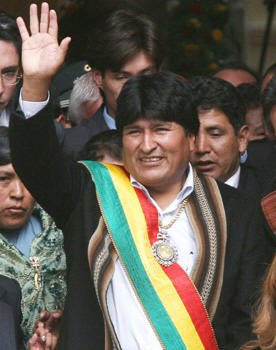
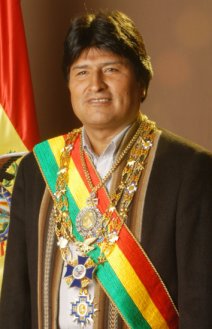
Evo Morales was elected President of Bolivia in December, 2005, an avowed socialist and the first fully indigenous president ever in South America. January 18 marks the anniversary of his first full year in office. His election was the first in recent Bolivian history to be achieved by popular vote rather than referred to the legislature for deciding among top candidates, and thereby Morales completely by-passed the old elite. In office, therefore, he was not bound by commitments to other parties, and he announced determination to go ahead with his platform promises of capturing far greater profits from oil and gas, of land appropriation and redistribution in the eastern departments, of constitutional reform, of increased GNP, and of improved amenities and opportunities (especially health and education) for the indigenous peoples of Bolivia. An ambitious program indeed.
The opposition initially remained subdued. Part of the reason may have been that the program was fraught with so many inherent obstacles that practical consequences seemed too remote to fear. Furthermore, Morales’s flair for unconventional publicity, as evident in his famous striped alpaca sweater and his waving a coca leaf at the UN, probably made him look a bit flaky. The elite relaxed again on May 1, 2006, when Morales announced a six-month deadline by which oil companies must renegotiate their contracts with Bolivia or face forfeiture of their infrastructure, new contracts that would award the lion’s share of profits to Bolivia rather than to the companies. The pundits and industry analysts agreed that Bolivia had bitten off more than it could chew and that in the long run the companies must prevail. It would teach Morales a lesson. No doubt the lesson it would teach was more or less the lesson the NY Times had in mind when it editorialized that the peasants in Bolivia needed to overcome their economic ignorance.
At the end of October, however, the companies capitulated, handing Morales not only billions in much needed revenue but also substantial political capital. With the revenue he announced an increase of 10% in teachers’ salaries, and with the political capital he stepped up the campaign of land reform. Now the elite really does feel threatened, and the counterrevolution has become more vociferous and more adamant -- and more violent. The violence began in late November when Morales’s limousine was stoned as he attempted to attend a meeting of business leaders in Santa Cruz (Bolpress 11/25/06), two days after a pro-business group announced it was mobilizing against the “dictatorship” of Morales and his party. In mid-January, the week before the anniversary of his inauguration, Morales returned from the inauguration of Daniel Ortega to face the aftermath of a violent clash in Cochabamba that left two dead and dozens hospitalized.
With respect to land reform, the legislature has passed a revision of the Land Reform Act of 1952, a component of the first Bolivian revolution under the leadership of Victor Paz Estenssoro in 1952. The revision allows confiscation of latifundios, large tracts of land —we are talking about hundreds of square miles, not hundreds of acres — that are unused, potentially productive, and with dubious titles. These lands are all located in the two largest departments, Santa Cruz and Beni, where some 80% of the land (more than 12,000 square miles, or nearly 8,000,000 acres) is held by 14 families, many not resident in Bolivia. Apart from the provisions of the new law, the government also challenges the validity of many of the titles to the land, contending they were conferred as favors by previous presidents who had no right to do so. The government has also said that it will not confiscate any land being used productively, because one of its aims is to increase GDP.
Naturally the right-wing elite does not trust the left-wing government, so there are fears that all the best productive land will be confiscated. Such fears were publicized by the NY Times in a story (12/21/06) about a successful Mennonite farming community in Santa Cruz Department. The community fled persecution in Europe and has been comfortable as well as successful in Bolivia, contributing to the export of soybeans while retaining their distinctive customs and their German language. They are, of course, far from panic or violence and they hold clear title to their land, but their fear may well be real, however ill-founded. The story in the Times said nothing about the government’s intention to limit confiscation to large unproductive holdings to which there is dubious title. It is absurd to put the productive Mennonite farms in the same category as the huge latifundios. The story is slick anti-Morales propaganda, with the fears of the Mennonites no doubt fanned by the elite to try to nudge the Mennonites into becoming part of their confrontation against Morales.
A second contentious issue is regional autonomy. Four departments that form a kind of half moon from north to east to south — Pando, Beni, Santa Cruz, and Tarija — are campaigning for autonomy that will prevent them from having to share their wealth with the rest of the nation. They are the departments that contain not only the huge latifundios but also most of the mineral and hydrocarbon deposits. The government has nationalized the hydrocarbon deposits and intends to nationalize mineral deposits as well, so those with claims hope that the regional autonomy will make it easier to retain their claims. In Santa Cruz there is considerable industrial production, whose owners favor the sort of neocon globalization that Morales resists, and the elite there also fears that the land reform could tip the population mix away from right-wing industry-friendly policies. Tarija has the principal deposits of oil and natural gas, Beni has large latifundios, and both Pando and Beni have significant mineral deposits. The government believes that the wealth of these departments is important to increasing the national GDP and intends to use royalties and tax revenues for national projects.
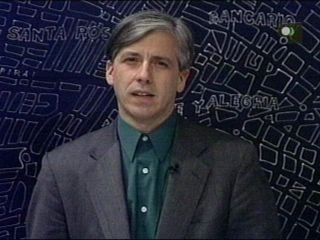
Another matter of contention is the Constitutional Convention. The idea for it goes back several years, but the members were not chosen until after the election of Evo Morales as President. The goal of the convention is to give more formal power to the indigenous majority, which means less power for the wealthy elite. As in the legislature, Morales’s party, MAS (acronym of “Movement Toward Socialism”), enjoys a comfortable majority but lacks the two-thirds needed to force its provisions into the Constitution. The basic rule governing the convention is that its text needs to be ratified by two-thirds of the representatives before going to a referendum. The right-wing has insisted that this means that each provision must separately attain a two-thirds majority, and the left that that special majority applies only to the full text. The dispute over this procedural point has for six months and prevented the Convention from considering any matter of substance. Morales’s Vice-President, Alvaro García Linera, broke the deadlock last week by announcing that MAS will agree to the two-thirds rule for each provision, with the reservation of taking other steps if nothing of substance is achieved in the coming six months.
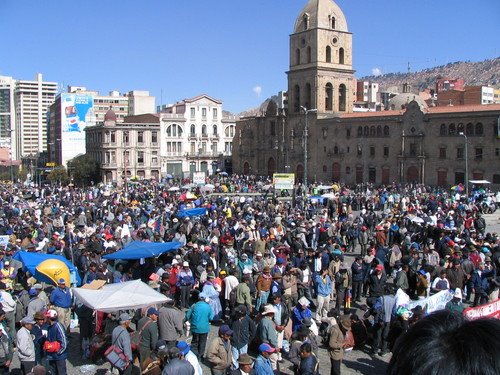
Like La Paz and Santa Cruz, Cochabamba is the name of both a city and a department. The city is the third largest urban center in Bolivia and one of the most vibrant. Its elevation is about 8,000 feet above sea level, and its people give strong support to the government. They are now confronting Manfred Reyes Villa, the governor of the department, one of the traditional political elite, and a rival candidate in the last presidential election, who retains lively ambitions for the next election. Thousands of peasants, who naturally support President Morales, gathered around the Governor’s mansion in Cochabamba demanding that Reyes Villa resign. The issue was the governor’s support of the call of the “half-moon” departments for autonomy. The Department of Cochabamba lacks the economic interests that band the other four departments together in their call for autonomy, and it has a greater concentration of Indians (mostly Quechua). The support of Reyes Villa for autonomy is therefore mostly political, and perhaps partly ethnic or social. As one of the powerful up-coming leaders of the right and of the old elite, he no doubt felt that his rightful place in this debate is in opposition to Evo Morales and to the determination of Indians to achieve a greater measure of equality in Bolivia.
The initial demonstrations in Cochabamba were not altogether peaceful. Streets were blockaded and windows were broken, but the damage was confined to property. After several days, however, things changed. What were described as “shock troops” in support of Reyes Villa entered the fray with bricks and baseball bats. Blood was shed, killing two of the demonstrators (a union member and a student) and sending dozens of people to the hospital. Reyes Villa was in La Paz meeting with the “half-moon” governors and did not return to take charge. So Morales returned from Nicaragua, sent federal troops to restore order, and asked his supporters to suspend the demonstrations for a time. Nonetheless, the deaths and injuries raised not only the stakes but also the indignation of the indigenous people of Cochabamba. Evo Morales is urging the legislature to pass a law allowing for recall referenda for governors and judges, so that the protesters in Cochabamba have an alternative and more democratic way of venting their anger.
The events in Cochabamba again show Morales as striving to avoid confrontations, especially bloody ones, and as moving toward democracy together with law and order. The events also show how significant regional autonomy is, and how sharp and volatile the divisions are within the country, sharpened on the one side by increasingly realistic hopes and on the other by increasing awareness of the competence and flexibility of the President. The autonomy being proposed would allow continuation or even increase of the disparity between the rich and the poor, wealth being retained in the provinces and controlled by the elite. The indigenous peoples are not, as the NY Times supposes, ignorant of basic economics. On the contrary, they realize full well that the whole point of autonomy, in the context of Bolivia today, is to keep them from sharing in the increasing GDP of the country.
Thus the events in Cochabamba in mid-January are a continuation of the drama that inaugurated a brand new act of the Bolivian drama at the end of October. When Evo Morales achieved the terms he had demanded from the oil and gas producers, and from Argentina as a long-term purchaser, everyone saw that he is a more powerful, more pragmatic, and more successful figure than they had hoped or feared. Not formidable internationally, Bolivia being so poor, but formidable indeed on the national scene, and far more formidable than anyone in Bolivia since Victor Paz Estenssoro.
In writing about these affairs, I speak of drama rather than confrontation. Violent confrontation would suit the rich elite, for they are rich enough to win a show of force. Violent confrontations also stall the economy, and if there is to be greater equality in Bolivia it must come from greater wealth, not through dividing existing wealth. It is vital for the overall program of Evo Morales and MAS that the Bolivian GDP increase dramatically. It is therefore important to avoid confrontations that impede productivity. Providing alternatives to violent confrontations is one of the challenges before the Constitutional Convention, as well as the legislature, and constitutes one of the quieter scenes of the drama — important despite its lack of glamor. The drama is complex as well as intense. One scene in the drama that receives comment in the Bolivian press nearly every week is conversations with Chile over trading natural gas (Chile has no internal energy supply other than water power) for access to the sea — a matter that the elite have no way to hinder and whose success would vastly increase Morales’s standing. Though this whole drama lacks significance on the world stage, its outcome will mean a great deal to this small country.
NEW YORK - Tribal leaders and the Aymaran president of Bolivia, Evo Morales, held a historic meeting September 18 before Morales' speech at the United Nations, where they discussed the dangers facing the natural world as well as human rights issues for Native peoples.
Morales, along with his country's foreign minister, David Choquehuanca, Aymara, are in New York City for the opening of this year's General Assembly at the United Nations. Morales addressed the General Assembly Sept. 19.
He met with leaders from the Haudenosaunee, Lakota and Cree nations, along with urban Natives from New York City. The opening ceremony was performed by Sid Hill, Tadodaho of the Haudenosaunee (Six Nations, Iroquois Confederacy) from Onondaga in upstate New York. Oren Lyons, also from Onondaga; Alex White Plume, tribal chairman and a traditional leader of the Oglala Lakota Nation at Pine Ridge; Willie Littlechild and Rick Lightning, both Ermineskin Cree Nation; John Bull, Louis Bull Cree Nation; and Raymond Cutknife, Samson Cree Nation, also participated in the exchange. Local leadership included Tonya Gonnella Frichner, a citizen of the Onondaga Nation. The meeting's moderators included Roberto Borrero, Taino; Esmeralda Brown, a longtime U.N. advocate for indigenous rights; and Kent Lebsock, executive director of the American Indian Law Alliance.
Prior to the afternoon meeting, Hill and White Plume listed some of the issues they would discuss as well as their approach to the gathering.
''We will talk about environmental issues around the country and the world, but also our battles with the courts,'' Hill explained. ''We are, of course, looking forward to meeting him but also to see if he can help our cause as Native peoples on our lands. Going through the U.S. courts is not getting us any kind of justice.''
White Plume echoed those concerns and noted additional details.
''Bolivia is a poor country, and I come from the poorest county in the U.S.; and we don't want to stay poor,'' White Plume asserted. ''We're going to ask him to ask why the U.S. doesn't honor the treaty rights of the Lakota; why every treaty was violated within three years ... and when we try to get a bill through Congress, they say we have no jurisdiction.
''We're going through the international arena to get support,'' he added.
The meeting was hosted by the secretariat of the U.N. Permanent Forum on Indigenous Issues and the AILA, an indigenous peoples' nongovernmental organization with offices in New York City. Alex Contreras, Morales' press secretary, stated that ''the meeting was set up at the request of President Morales, who seeks to initiate a substantive exchange between indigenous leaders from the North and the South to discuss the issues shared by Native peoples of the Western Hemisphere.'' Lebsock added, ''The election of President Morales is an historic event for all Indian peoples. For him to honor us by meeting with our traditional Native American leaders is another step in the undeniable presence of indigenous peoples in international advocacy, especially human rights.''
Morales' office had specifically requested a small meeting in order to ensure that substantive, frank discussions could occur.
Participants hoped that this would be the first of more meetings designed to improve the dialogue between the Bolivian government and American Indian nations and First Nations of Canada. Their positive hopes were justified.
''I was really satisfied,'' White Plume noted. ''And he [Morales] was very impressed.'' The Lakota leader recounted how Morales had thought that ''American Indians were imperialists like the rest of the country, but we cleared that up.''
''It was interesting that the way he grew up was similar to how it was for us in the beginning of our colonization, but he kept to the old ways,'' White Plume continued. ''And we agreed that all indigenous people need to bring back some of our old ways.''
That many North American clans were intact and that the old languages were being preserved were among the things that impressed Morales, he stated.
''But we also discussed how the earth, the air and the water have been ruined in the last 500 years, in both our countries,'' he stated. ''We also want to work on getting the Vatican to rescind the Papal Bull of 1493 which declared us heathen and savages ... we unanimously agreed to work on that together.''
The North American leaders were asked to help Morales draft a few comments about the Declaration on the Rights of Indigenous Peoples, which were to be included in his speech to the United Nations.
''It has been a rewarding day,'' Lebsock said. ''We asked him to urge the General Assembly to pass the Declaration unamended, as-is, and to remind them that this is a new beginning for the human rights of indigenous peoples.''
He noted that certain articles of the declaration dealt with many of the issues discussed at the meeting; Article 3 on self-determination, Article 36 on treaties, and Articles 21 - 28 dealing with access to and control of natural resources. (More info on the declaration can be found at the AILA Web site, www.ailanyc.org.)
The meeting occurred at the beginning of the General Assembly session. It is expected that the United Nations will take up the issue of the Declaration on the Rights of Indigenous Peoples.
For more than 20 years, indigenous peoples from around the world have worked with human rights experts to develop this international human rights instrument. Finally, having made its way to the General Assembly, the declaration is being supported by many U.N. member states and indigenous nations, organizations and communities around the world. However, it is also facing strong opposition from the United States, Canada and Australia. relations. It was a very positive meeting.''
The meeting between Morales and North American Indian leaders also focus on ensuring the passage of the declaration.
''And he invited all of us to visit him in Bolivia,'' White Plume added. "He opened the door to establish more formal relations. It was a very positive meeting."
In the first high-level visit by a Bolivian official since Morales took office in January - Bolivian Vice President Alvaro García Linera, led a delegation that included major opposition and business leaders to lobby for the renewal of a trade benefits package that expires at the end of the year.
The prime motive of García Linera's four-day trip was to lay the groundwork for extension of the Andean Trade Promotion and Drug Eradication Act which expires in December. The pact gives Bolivia preferential access to the U.S. market, granting zero tariffs for several Bolivian products exported to the U.S since 2002.
It also aims to promote a non-drug-trafficking economy and is meant as an incentive to Andean countries for their cooperation in the War against Drugs. García Linera would like to see Washington extend the trade pact for at least another year while the Constituent Assembly finishes its work. Then the United States and Bolivia could discuss a long-term trade arrangement.
Calling the U.S. a ''strategic partner,'' García Linera stated that the Bolivian government is fully committed to democratic principals and to fighting drug trafficking, and that foreign investors had little to fear, despite a nationalization of the country's oil and gas industry on May 1.
The Vice President says the oil and gas industry is unique for government intervention because it represents a fifth of Bolivia's economy. And although the government will continue to seek higher royalty taxes from companies, foreign minority partners are still welcome.
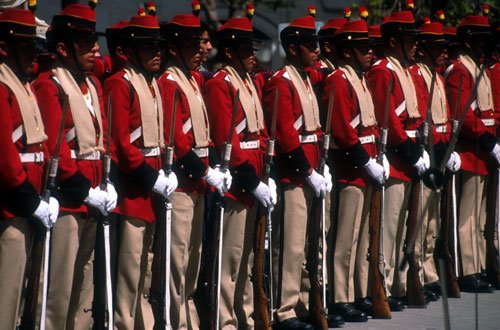
Shortly before Sunrise, the military police huddled in the doorways of the Plaza Murillo begin to stir beneath their capes. The door of the presidential palace creaks open and the guards, in scarlet tunics and white webbing, begin a rigmarole of shuffling, stamping and saluting that is the changing of the guard.
The police are muscular white guys. The guards, armed with muskets, are willowy young indigenous kids - the regiment has always recruited from the "indios" for ethnic novelty value.
Now, as the police strut away, the guards smile nervously at each other from beneath their kepis: then they collapse in a fit of giggles.
Evo Morales . "Look," President Morales tells Paul Mason of the BBC, "60 years ago, our grandparents didn't even have the right to walk into the main square - not even in the gutter. And then we got into parliament - and now we're here."
He looks around apologetically at the long Rococco state room we are meeting in - at the ormolu chairs we are sitting on. He has installed a portrait of Che Guevara in the presidential suite but, apart from that, the palace remains as it was under his neo-liberal predecessors. "It's been a great victory - now this is a stronghold for the indigenous people. And we're not going to stop," Mr Morales says.
"The most important thing is the indigenous people are not vindictive by nature. We are not here to oppress anybody - but to join together and build Bolivia, with justice and equality."
In truth, the Morales presidency is fast getting beyond the "peace, love and understanding" phase. The first indigenous leader to run Bolivia has been two months in office, but he does not feel like he is in power - yet.
"You want to issue a decree to help the poor, the indigenous people, the popular movements, the workers... but there's another law. Another padlock. It's full of padlocks that mean you can't transform things from the palace... I feel like a prisoner of the neo-liberal laws."
For a man who rose to prominence as a union leader, and to office on the back of social movements with mainly economic grievances, economic policy has hardly figured in the first 60 days.
Instead, he has used the parliamentary majority that came with his 54% landslide to push through a law convoking a Constituent Assembly, and allowing regional referendums on autonomy. "In last year's election we only captured government - with the Constituent Assembly we want to capture political power. "Who makes the decisions here - the poor and indigenous people or those families who've done so much damage to our country in the past? They discriminated against, marginalised, oppressed, hated and totally disregarded the indigenous people. It's a political fight - it's a fight for power."
If the economic conditions Mr Morales has inherited are relatively benign that is because of Bolivia's newfound hydrocarbon wealth.
The trillion-cubic-metre gas field was discovered in the late 1990s and, originally, leased at what Mr Morales sees as knock-down prices to the oil and gas corporations.
He has got a judge beavering away at declaring the original contracts illegal, and plans to nationalise the gas and oil industries.
But here is the problem. Most of the gas is in the Chaco region, administered from the city of Santa Cruz, which represents 33% of the country's GDP and 25% of the population.
Santa Cruz is the traditional base of the Christian right-wing parties - it is the centre from which the US anti-drug operation is run, it is where Repsol, Petrobras and British Gas are headquartered.
Now Santa Cruz wants autonomy and the right to all but 10% of the hydrocarbon revenues.
President Morales appears unfazed by veiled threats of disinvestment.
"Of course, there could still be sabotage - we've just heard the news that some transnational companies are putting $2m into a campaign to boycott my government. It doesn't matter - we're monitoring the problem," he says.
Meanwhile, his own mass base is restive.
The miners of Huanuni, buoyed by the rising international price of tin, paralysed the southern quarter of the country with a series of roadblocks, enforced with dynamite. Their demand? Fifty-five extra teachers in their local schools.
Mr Morales' response - to announce he would provide 3,000 extra teaching posts, paid for by closing embassies and scrapping "decorative" civil service posts.
He seems to sense there is only so long you can go on like this, but as the first indigenous leader in the continent, he has some unique cards to play, the first one being himself:
"I have a lot of trouble understanding all the detail of finance and administration - but if you combine intellectual and professional capacity with a social conscience, you can change things: countries, structures, economic models, colonial states."
That position has visceral support in a place like El Alto, the shanty-city of one million Aymara people which dominates the high plain above La Paz.
There the talking point is not whether the president should nationalise the gas and neutralise the opposition - but what they will do to him if he fails.
They will tolerate Evo, one tells me, for a year or two - though they will never move against him if it weakens the united front against "the whites".
Mr Morales, for now, is more than capable of meeting the wave of rising indigenous cultural consciousness with concrete reforms. But soon the crunch will come - the form and costs of nationalisation for the hydrocarbons industry must be concretised.
How it all pans out now depends on whether he can forge his political party, the Movement Towards Socialism - until now more of a federation of disparate social movements - into a disciplined political force.
It scored a big election victory not only because it mobilised the poor but because the young, white, foreign-educated middle class mobilised themselves to vote for change.
Their vote was more of a rejection of the failure of their fathers' generation than an endorsement of Evo Morales.
"We hope the delegates to the Constituent Assembly will represent not only the indigenous people and popular movements but patriotic professionals, intellectuals and business people. If these patriotic sections take part we'll succeed," Mr Morales tells me.
What happens if they drift away, if the foreign gas companies play hardball, if the rumours of paramilitary arms stockpiles around Santa Cruz turn out not to be scare stories?
Well, at that point the farce played out at the palace gate between the president's ceremonial guards and the muscular remnants of regimes past may turn nasty, on a national scale.
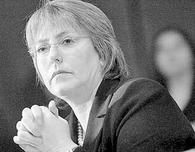
This weekend Condoleezza Rice will visit Chile for the inauguration of a new president, Michelle Bachelet, a very 21st-century woman and, as a moderate socialist, very much like other democratic leftist populists emerging around the region. The Secretary of State said the United States has no quarrel with leftist leaders in Latin America as long as they govern well.
During her two-day trip to Chile, Ms. Rice will hold a host of meetings with Latin American leaders, including Bolivian president Evo Morales. Mr. Morales has confirmed he will meet this weekend in Chile with US Secretary of State at the swearing in of Chile´s new president.
Morales said in interviews that in spite of U.S. claims to good relations and cooperation with his government, he has received "great aggression and provocation" from the United States administration.
The meeting’s agenda could include maintaining preferential US tariffs for Bolivian manufacturers and preservation of the Andean market for soy from the latter, threatened by Washington´s “Free Trade Agreement” with area nations.
Since his election, Morales has held a cordial phone call with President George Bush and asked the United States to reconsider a proposed cut in anti-drug aid to Bolivia from $80 million to $67 million. The United States did offer a small amount of humanitarian assistance in the recent flooding of rural areas that has claimed many lives and left thousands homeless.
Yet, just the mere presence of Morales is in itself a significant event and lies heavy with historical context. It is the first time ever has a president of Bolivia attended an inauguration in Chile.
The reason being that the two countries had engaged in a war in the nineteenth century (War of the Pacific - 1879-84), at the end of which both Peru and Bolivia were forced to cede territory to Chile. Bolivia turned over its Pacific coast province of Litoral and has been a landlocked nation ever since. The Bolivians continue to claim the area, known as the Atacama corridor, but the former governments of Chile have refused to negotiate.
Morales is scheduled to also have private talks with both the outgoing president of Chile, Ricardo Lagos, and Ms. President Michelle Bachelet. So many already have affirmed their most sincere congratulations and note an expressed ecstatic optimism of her ascension to office.
The Bolivian government has expressed concern at the United States' revocation of a travel visa to a popular Bolivian Senator "on suspicion of terrorism". President Evo Morales criticized the United States on Thursday for canceling the visa of one of his closest confidants in the first diplomatic incident with Washington since taking power a month ago.
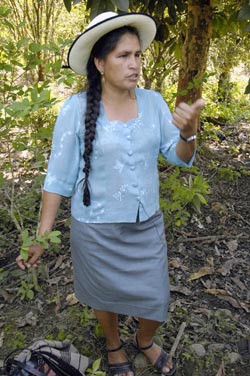
Senator Leonilda Zurita-Vargas, told local media that U.S. State Department officials had told her she was considered a terrorist, something she has called "an offense against Bolivian women".
In Washington, State Department Deputy Adam Ereli said Zurita's visa was revoked without notification on May 7, 2004, after the U.S. government received "information" about her.
For the Bolivian press, it is the accusation of collusion with Colombian citizen Francisco "Pacho" Cortes (falsely accused of terrorism by the former Bolivian Government) that stripped the Senator of her visa. For others, it is construed as retaliation by the Bush administration against the new government of Bolivia for it's positions on Coca eradication and immunity for US troops guilty of crimes against humanity.
Senator Zurita-Vargas had scheduled a trip that would have included speaking engagements at Stanford University, the University of Vermont, and the University of Florida at Gainesville, culminating in a speech at the Kennedy School of Government at Harvard University.
Like Morales, Zurita-Vargas' roots can be traced to early advocacy work that she did for coca growers in the Chapare region, and the prominence she gained as a leader of the anti-coca eradication protests in 2002-2003. In last December's national elections, she joined Morales' MAS party and won election as a Senator from Cochabamba, largely because of her leadership in the social sector.
Zurita-Vargas' has flown to the U.S. four previous times. Her most recent visit was to participate in various events, including an appearance at Harvard University in late February of 2003.
Taking the coca leaf off the United Nations' Single Convention on Narcotic Drugs list was one of the main planks of Morales' election campaign. His anti-eradication moves as president are being followed closely, not only by his constituency in Bolivia but also in Colombia and Peru, where there are fledgling coca-based legal industries.
The Bolivians are now investigating the Spanish-Argentine petroleum company Repsol YPF who has illegally extracted crude oil from Bolivia without authorization. Jorge Alvarado, head of Bolivian state oil company YPFB, has said in an interview published Feb. 8 in Spanish Newspaper El Mundo that Bolivian customs had evidence indicating that Repsol had altered documents in order to take vast amounts of oil out of the country without the government's permission or knowledge.
Andina S.A., a subsidiary of Spanish-Argentine oil company Repsol YPF, has been under investigation for the last several months for overtly and repeatedly smuggling resources out of Bolivia..
According to tracking documentation, the smuggled oil exports were spirited out of country & passed through the Yacuiba pipeline. Andina S.A managers had even requested the Ministry of Hydrocarbons for a "resolution"; by which the export of an additional 150,000 barrels of crude would be authorized to the company. Repsol spokesman have declined to comment on the the documentation and the pending report that could fine the company for evading tariffs, duties and taxes.
But the Spanish-Argentine Repsol YPF SA have cut its own oil & gas reserves estimates by 25 percent, supposedly due to Bolivian "production prospects" by "political uncertainty". Additionally, the company has decided to freeze $480 million USD it had earmarked for investment in Bolivia's gas production and delivery systems.
The Cochabamba water revolt , which began exactly six years ago this January concluded this month when Bechtel, one of the world's most powerful corporations, formally withdrew its legal efforts to take $50 million (USD) from the Bolivian people. Bechtel made that demand before a secretive trade court operated by the World Bank - the same institution that initially coerced Bolivia to privatize its water. Faced with protests, barrages of e-mails, visits to their homes, and years of damaging press, Bechtel executives finally decided to acquiesce by walking away with a token payment equal to thirty cents or about two bolivianos. That quick retreat seems to have set a staggering global precedent.
The Cochabamba Water Revolt In January 2000 the people of Cochabamba, Bolivia woke up one morning to discover that their public water system had been taken over by a mysterious new private company, Aguas del Tunari. The World Bank had coerced Bolivia into privatizing its water, as a condition of further aid. The new company, controlled by Bechtel, the California engineering giant, announced its arrival with a huge instant increase in local water bills. Water rates increased by an average of more than fifty percent, and in some cases even higher. Bechtel and its Spanish opportunist co-investor, Abengoa, had priced water beyond what many families here could afford.
Citizens of Cochabamba demanded that the imposition of rate hikes be permanently reversed. The ruling Bolivian government had belligerently denied these requests. Then those of Cochabamba demanded that the contract with the company be quashed or voided. Instead, the US-backed government deployed national police forces and soldiers to seize control of the city and enforce a state of martial law upon its own citizens.
The people of Cochabamba were then faced with severe police brutality and beatings at the hands of authorities. The leaders of the civil disobedience were then forcibly removed from their homes and illegally detained in the dead of night. Sadly, the city lost a seventeen-year-old boy after he was shot & killed by government forces. Even in the face of such brutality, those same citizens refused to relent or desist. Finally in April of 2000, Bechtel was forced to abandon its water contracts & leave its facilities in Cochabamba - the people of Cochabamba had won back their right to public water.
Bechtel Fights Back Eighteen months later Bechtel and Abengoa sought to economically bankrupt Bolivia by filing a $50 million legal action against the country in the World Bank's trade court, the International Center for Settlement of Investment Disputes (ICSID). An “extra-judicial” forum that was tailor-made for global multi-national companies like Bechtel. The people of Cochabamba were required to make arguments & attend court proceedings in Washington DC. The proceedings were then to be conducted in English & contained within a process so secretive that no member of the public or press would be allowed to bear witness. There was to be no notification of those who would testify before such a court, nor would there be access to the records of what was actually to be testified in the record.
Bechtel maintained that it was suing for both its losses and the future profits that the company was not going to accrue. Public records had later verified & established that Bechtel and its opportunistic associates had yet to spend $1 million USD in Bolivia. The estimated annual GDP for Bolivia in 2005 is $25,892,000.00 USD, making Bechtel's intentions questionable and the ICSID court's mere establishment an embarrassment.
The People vs. Bechtel Organizations from 43 countries joined in a citizens' petition to the World Bank demanding that the case be made available to public scrutiny & participation. Activists in Washington DC began to stage protests at the home of the head of Bechtel's water company. Hundreds of articles and dozens of documentaries were published and produced worldwide, making Bechtel and its Bolivian water takeover a poster child of corporate economic colonialism and opportunism.
Bechtel is so powerful a corporation that it is awarded billion-dollar, no-bid contracts to rebuild Iraq by the Bush Administration. This multi-national company had to discover the hard way that the people of Cochabamba were a greater force than such a conglomerate could maneuver past. In June of 2005, Bechtel and its associates capitulated to public pressure and initiated a negotiating process to withdraw their case for the token payment of two bolivianos (thirty cents).
Sources closest to the negotiations say that Bechtel's CEO, Riley Bechtel, personally intervened to bring the case to an end. Seemingly, the company was weary of the ongoing damage to the corporation's public perception. Bechtel even flew officials to Bolivia this month to sign the closing document, collect their two coins and perform the proverbial media perp walk.
Bechtel's Settlement & Its Implications Bechtel's settlement is historic in the context that it stems from the economic raiding of a developing country's natural resources by advocates of free market globalization. The World Bank's system of closed-door trade courts has received more than 200 cases similar to that of Bechtel's. Both the World Trade Organization and the North American Free Trade Agreement administer "trade courts" which have a myriad of cases where multi-nationals are permitted to move against impoverished nations.
Yet to this date, in no other publicly noted case has such a powerful multi-national withdrawn from pending litigation as a result of public pressure.
International financial institutions, such as the World Bank and International Monetary Fund, coerce poor countries into privatization arrangements as a condition of most developmental aid. Corrupt & incompetent government officials negotiate with multi-national corporations behind closed doors, often producing transactions that are detrimental to the developing countries. It is only after the natural resources are sold to multi-nationals - which sell the basics of life for a profit - that the affected populations are made aware of these policies.
In Cochabamba, the people decided to take no more of "economic opportunism" by acting in the spirit of Caesar Chavez, Martin Luther King Jr., & Dr. Ernesto "Che" Guevara de la Serna and they secured their water. The local and global campaigns against Bechtel had sent an important message to other multi-nationals who are intent on their "legal" free-market raiding of even the poorest counties, like Bolivia and beyond.
Most global corporations can manage media relations with great ease. When Bechtel and it's associates assumed the risk concerning litigation in Cochabamba, they could only conclude that the cost to the company's public reputation outweighed the bankrupting payment they were to require of Bolivia.
Once again, it was made clear that the economic rules of the game can be modified even in the face of a tsunami-like tide of the free market. The people of Cochabamba won their struggle over water with personal courage & a steadfast commitment to the future generations. This series of events now emboldens the people of Bolivia as they have won the second and most important final round of the "water revolt".